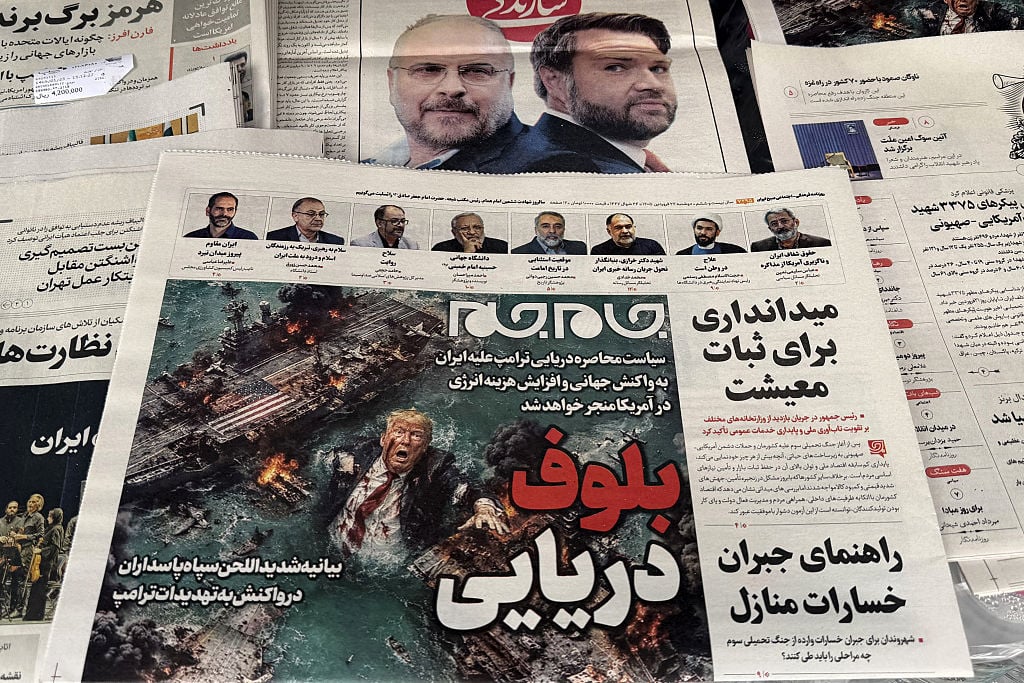
President Donald Trump dismissed Iran’s recent response to a U.S. peace proposal aimed at ending the 10-week Middle East war.
What did Trump say about Iran’s response to the U.S. ceasefire proposal?
“I have just read the response from Iran’s so-called “Representatives.” I don’t like it — TOTALLY UNACCEPTABLE! Thank you for your attention to this matter,” Trump wrote in a Truth Social post on Sunday.
In a separate Truth Social post earlier that day, Trump also accused Iran of “playing games with the United States, and the rest of the World.”
Iran framed the U.S. proposal as a demand for “surrender.” In contrast, its counterproposal reportedly demanded an end to hostilities across the region, the lifting of U.S. sanctions on Iranian oil sales, an end to the U.S. blockade on Iranian ports, the release of frozen Iranian assets, and recognition of Tehran’s sovereignty over the Strait of Hormuz, according to NPR, CNBC and Iran’s Tasnim news agency.
Iranian officials speak out on demands for the U.S.
On Monday, Foreign Ministry spokesperson Esmail Baghaei said Washington continued to push “unreasonable demands.” He said Iran “did not demand concessions” but Iran’s “legitimate rights,” per NPR.
Iran reportedly delivered its latest response through Pakistani mediators, with talks currently centered on halting regional hostilities rather than extensive nuclear concessions.
Iranian President Masoud Pezeshkian said Sunday in a post on X, formerly known as Twitter, that “We will never bow our heads before the enemy, and if talk of dialogue or negotiation arises, it does not mean surrender or retreat.”
The Islamic Republic of Iran Broadcasting also said that the Iranian “response given to the U.S. remains in line with our previous positions, including readiness to continue the ceasefire in exchange for the reciprocal opening of the Strait of Hormuz and advancing negotiations focused on ending the war in the region,” NPR reported.
Iranian army spokesperson says the country has “surprising plans” is U.S. strikes again
The U.S. launched the war on Feb. 28, citing goals that included dismantling Iran’s nuclear program, curbing its missile capabilities, and ending support for regional proxy groups such as Hezbollah, per NPR and The Wall Street Journal. However, Israeli Prime Minister Benjamin Netanyahu said in an interview with CBS News’ 60 Minutes that Iran has neither surrendered its enriched uranium nor dismantled nuclear facilities, insisting there was “more work to be done.”
Iran has rejected U.S. demands to dismantle its enrichment program, offering only limited concessions regarding uranium enrichment. Meanwhile, the conflict has shaken global energy markets after Iran restricted traffic through the Strait of Hormuz and the U.S. imposed a blockade on Iranian ports, contributing to a nearly 5% rise in oil prices.
The Iranian army spokesperson, Brig. Gen. Mohammad Akraminia said in an interview with IRNA that the country has “surprising plans” for the U.S. if it strikes again.
“We warn the enemy that if they once again commit aggression and fall into another miscalculation, as they did in the past and are still paying the price for today, they will certainly face other surprising options,” he said.
